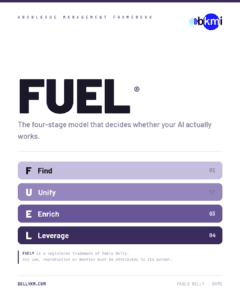
La relación entre la Gestión del Conocimiento e Inteligencia Artificial se está convirtiendo en uno de los factores más determinantes para la competitividad empresarial. Mientras los directorios discuten estrategias de IA y las organizaciones invierten millones de dólares en plataformas como ChatGPT Enterprise, Microsoft Copilot, Gemini o Claude, una realidad menos visible comienza a emerger: la calidad de los agentes inteligentes dependerá directamente de la calidad del conocimiento organizacional disponible para ellos.
Durante los últimos dos años, la Inteligencia Artificial ha ocupado el centro de la agenda empresarial. Los CEOs anuncian programas de transformación, los líderes tecnológicos aceleran la adopción de agentes inteligentes y las organizaciones buscan nuevas fuentes de productividad. Sin embargo, muchas compañías están descubriendo que el verdadero desafío no es la tecnología, sino la capacidad de gestionar, estructurar y contextualizar el conocimiento que alimentará esos sistemas. Este nuevo escenario está redefiniendo la relación entre la Gestión del Conocimiento e Inteligencia Artificial, obligando a las organizaciones a replantear cómo capturan, organizan y utilizan su conocimiento corporativo.
La calidad de los agentes inteligentes dependerá directamente de la calidad del conocimiento organizacional disponible para ellos.
Esta afirmación puede parecer evidente. No lo es. De hecho, representa uno de los cambios más profundos en la historia de la Gestión del Conocimiento. Durante más de tres décadas diseñamos sistemas para que las personas encontraran conocimiento. Hoy comenzamos a diseñar sistemas para que los agentes inteligentes puedan consumirlo. Y esa diferencia cambia absolutamente todo.
Gestión del Conocimiento e Inteligencia Artificial: El fin de una era
La Gestión del Conocimiento nació con una misión relativamente clara: 1) Capturar experiencia. 2) Organizar información. 3) Facilitar el aprendizaje. 4) Reducir la pérdida de conocimiento.
A lo largo de los años surgieron múltiples herramientas para lograrlo:
- Repositorios documentales.
- Bases de conocimiento.
- Lecciones aprendidas.
- Comunidades de práctica.
- Directorios de expertos.
- Portales corporativos.
Sin embargo, todas ellas compartían un supuesto implícito:
El consumidor final del conocimiento era una persona.
Hoy ese supuesto está desapareciendo. La irrupción de la Inteligencia Artificial Generativa y de los agentes inteligentes está dando origen a un nuevo paradigma.
| Antes | Ahora |
|---|---|
| Personas buscan conocimiento | Agentes consumen conocimiento |
| Repositorios | Contexto para IA |
| Lecciones aprendidas | Memoria organizacional para agentes |
| Knowledge Base | Knowledge Layer |
La Gestión del Conocimiento ya no consiste únicamente en ayudar a las personas a encontrar respuestas. Consiste en construir la infraestructura cognitiva que permitirá a los agentes inteligentes actuar con precisión, contexto y criterio.
La nueva guerra empresarial: Gestión del Conocimiento e Inteligencia Artificial frente al paradigma de los datos
Durante años se popularizó una frase que definió gran parte de la economía digital: Data is the new oil.
La metáfora fue poderosa: Los datos impulsaron la transformación digital dando origen al Big Data y alimentaron los algoritmos que impulsaron la analítica avanzada, pero la próxima década estará marcada por una realidad diferente.
Context is the new competitive advantage.
La nueva guerra empresarial ya no será por los datos. Será por el conocimiento contextual. Las organizaciones poseen cantidades extraordinarias de información. Millones de documentos. Miles de procedimientos. Décadas de experiencia acumulada. Terabytes de datos históricos. Sin embargo, los agentes inteligentes necesitan mucho más que información.
Necesitan comprender:
- Contexto.
- Experiencia.
- Criterio.
- Conocimiento tácito.
- Restricciones operativas.
- Historial de decisiones.
- Buenas prácticas.
Los datos explican lo que ocurrió. El conocimiento contextual permite decidir qué hacer a continuación. Y esa diferencia será decisiva.
El próximo CEO no preguntará qué sabe su empresa
Durante décadas, los líderes empresariales formularon una pregunta fundamental: ¿Qué sabe nuestra organización?
Era una pregunta lógica. El conocimiento era considerado un activo estratégico que debía capturarse, protegerse y compartirse. Sin embargo, la próxima generación de líderes formulará una pregunta diferente:
¿Qué saben nuestros agentes?
La diferencia parece menor sin embargo, no lo es.
Los agentes inteligentes están comenzando a ejecutar trabajo autónomo, reducir tiempos operativos, ampliar el alcance del trabajo del conocimiento y aumentar la productividad organizacional. Pero para hacerlo necesitan acceder a algo más importante que tecnología, necesitan conocimiento.
Y no cualquier conocimiento, necesitan conocimiento confiable, contextualizado y continuamente actualizado.
La capacidad competitiva de una organización ya no dependerá únicamente de las capacidades de sus colaboradores sino que dependerá también de las capacidades cognitivas de sus agentes digitales.
El problema que nadie está viendo en la Gestión del Conocimiento e Inteligencia Artificial
Mientras las organizaciones aceleran sus inversiones en Inteligencia Artificial, una parte significativa de ellas está construyendo sobre fundamentos débiles y en para ponerlo en productos concretos, as empresas están comprando:
- ChatGPT Enterprise.
- Microsoft Copilot.
- Gemini.
- Claude.
- Plataformas de agentes inteligentes.
Pero continúan ignorando problemas históricos relacionados con:
- Calidad del conocimiento.
- Taxonomías corporativas.
- Gobernanza de la información.
- Curación de contenidos.
- Gestión de expertos.
- Transferencia de conocimiento.
- Contexto organizacional.
La Inteligencia Artificial no corrige el desorden organizacional; por el contrario, lo amplifica.
Si el conocimiento está fragmentado, los agentes producirán respuestas fragmentada por lo tanto, si la información es inconsistente, los resultados también lo serán. Asi mismo, es natural decir que si el conocimiento crítico permanece únicamente en la mente de los expertos, los agentes jamás podrán acceder a él.
¿Por qué podrían fracasar las iniciativas de Gestión del Conocimiento e Inteligencia Artificial?
Comprender la relación entre Gestión del Conocimiento e Inteligencia Artificial ya no es una cuestión académica ya que se ha convertido en un requisito estratégico para cualquier organización que aspire a obtener valor real de sus inversiones en IA.
Existe una tendencia preocupante.
Diversos estudios muestran que muchas organizaciones todavía enfrentan dificultades para convertir sus inversiones en IA en resultados concretos y en la mayoria de estos casos vemos en clientes que la razón no suele ser tecnológica sino que es estructural.
Las empresas han dedicado años a digitalizar procesos, pero pocas dedicaron el mismo esfuerzo a estructurar su conocimiento. En muchas experiencias vemos que han acumulado información pero no necesariamente conocimiento utilizable y en estos casos la diferencia es enorme.
La Inteligencia Artificial necesita mucho más que documentos, requiere contexto para interpretar situaciones, significado para comprender relaciones, memoria organizacional para aprender de la experiencia y conocimiento preparado para ser consumido por máquinas.
Cómo las organizaciones líderes integran Gestión del Conocimiento e Inteligencia Artificial
Las empresas más avanzadas comienzan a comprender esta realidad y ya no están enfocándose únicamente en modelos porque están construyendo arquitecturas de conocimiento.
JPMorgan Chase
JPMorgan ha realizado inversiones multimillonarias en Inteligencia Artificial para apoyar procesos de análisis, productividad y toma de decisiones.
Sin embargo, gran parte del valor generado proviene de la capacidad de conectar modelos de IA con enormes volúmenes de conocimiento corporativo, procesos documentados, normativas internas y experiencia acumulada.
La tecnología por sí sola no crea ventaja competitiva. La combinación entre IA y conocimiento institucional sí lo hace.
Shell
Shell lleva años desarrollando iniciativas relacionadas con gestión del conocimiento, captura de experiencia y transferencia de conocimiento crítico.
En la actualidad, ese patrimonio intelectual constituye una base fundamental para iniciativas avanzadas de automatización e Inteligencia Artificial.
La empresa comprendió antes que muchas otras que el conocimiento acumulado durante décadas representa un activo estratégico difícil de replicar.
Schneider Electric
Schneider Electric ha sido reconocida internacionalmente por sus prácticas de Gestión del Conocimiento y aprendizaje organizacional.
La compañía ha construido mecanismos para conectar expertos, documentar experiencias y facilitar el acceso al conocimiento técnico.
En la era de la Inteligencia Artificial, estas capacidades adquieren una nueva relevancia porque permiten alimentar sistemas inteligentes con información validada y contextualizada.
El surgimiento del Knowledge Layer
Desde esta perspectiva, la Gestión del Conocimiento e Inteligencia Artificial dejan de ser disciplinas separadas y pasan a formar parte de una misma arquitectura empresarial.
Durante años las organizaciones construyeron infraestructuras tecnológicas. Hoy necesitan construir una infraestructura cognitiva. Ese nuevo componente puede definirse como:
Knowledge Layer.
Una capa organizacional diseñada para estructurar, conectar, contextualizar y gobernar el conocimiento que consumen los agentes inteligentes. Las organizaciones que desarrollen esta capacidad contarán con una ventaja difícil de imitar.
Esto se debe a que la tecnología puede comprarse, en cambio, el conocimiento contextual no.
La infraestructura invisible de la próxima década
Así como internet necesitó redes de telecomunicaciones y la transformación digital necesitó sistemas de información, la Inteligencia Artificial necesita una infraestructura de conocimiento.
Las organizaciones líderes ya comenzaron a comprenderlo de manera que la próxima ventaja competitiva no surgirá exclusivamente de los modelos sino que surgirá de la calidad del conocimiento que los modelos puedan utilizar. Por eso la pregunta estratégica más importante para los próximos años no será: ¿Qué plataforma de IA estamos utilizando?
Será:
¿Qué saben nuestros agentes?
Porque en un mundo donde la tecnología será cada vez más accesible, el conocimiento contextual seguirá siendo el activo más difícil de copiar. Y precisamente allí se construirá la próxima gran ventaja competitiva empresarial.
Las organizaciones que logren integrar eficazmente la Gestión del Conocimiento e Inteligencia Artificial estarán mejor posicionadas para desarrollar agentes más precisos, acelerar la toma de decisiones y construir ventajas competitivas sostenibles.